How Commercial Real Estate Can Unlock Business Capital
September 21, 2026
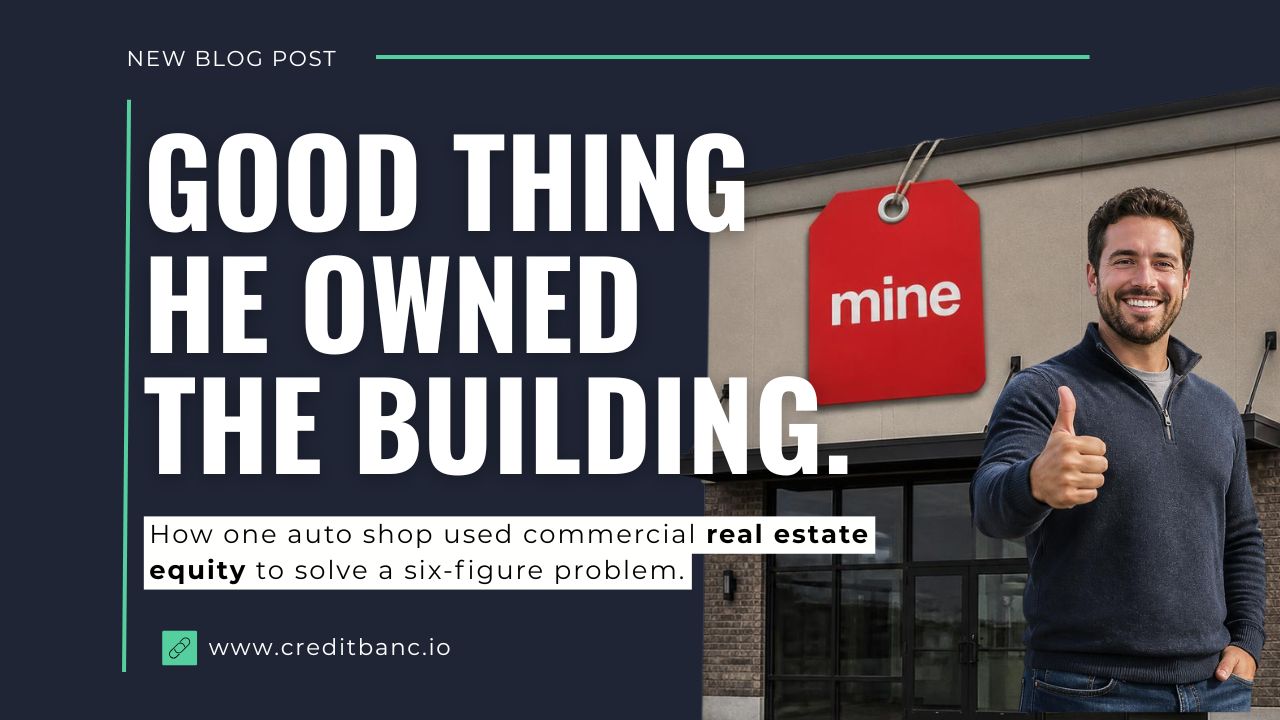
There are accounting mistakes.
Then there’s discovering your business owes roughly $150,000 in sales tax you thought was being handled.
That’s less “whoops” and more “everybody sit down.”

That’s the situation one New England area auto repair shop found itself in after years of unpaid sales taxes piled up. The owner believed his accountant had been remitting the payments.
Apparently, somebody missed a memo.
And because tax authorities aren’t exactly known for their generous “no worries, these things happen” policy, the original balance had also picked up penalties and interest along the way.
The business needed a solution. But another problem emerged.
The Business Couldn’t Support the Loan It Needed
When a business needs financing, lenders don’t just look at the size of the problem and hand over a matching pile of money.
They look at things like revenue, cash flow, debt obligations, credit, collateral, and whether the business can realistically repay what it borrows.
In this case, the shop wasn’t producing enough revenue to comfortably support the amount of financing needed to clean up the tax mess.
But it had something else.
Real estate.
The repair shop owned the building it operated from. Even better? There was no mortgage on it. Suddenly, the conversation changed.
The Building Was More Than Just a Place to Fix Cars
Because the commercial property had substantial equity, it could potentially support financing even though the operating business alone couldn’t justify the full loan amount.
The property was appraised, and financing was structured at roughly 50% of its appraised value.
That produced about $227,000 in capital, enough to knock out the outstanding liabilities and leave some additional cash for the business.
There were no magic tricks or secret loopholes. Just an asset the owner had spent years building equity in, finally doing something useful besides holding up the roof.
What Does Loan-to-Value Mean?
This is where loan-to-value, or LTV, comes in.
Despite sounding like something invented specifically to make normal people hate finance, the idea is pretty simple.
If a commercial property is worth $500,000 and a lender is willing to lend up to 50% of that value, the potential loan amount would be $250,000.
Property value × allowable LTV = potential loan amount.
Now, that doesn’t mean every property automatically qualifies, or that every lender uses the same percentage. Location, property type, condition, appraisal, borrower strength, and plenty of other factors can influence the deal.
But equity can create another financing option when the business itself hits a wall.
This Is Why Owning Your Business Property Matters
Sure, renting has advantages.
It requires less capital upfront. You can move more easily. And when the HVAC system decides to die during the hottest week of August, there’s at least a chance you can make it somebody else’s problem.
But owning commercial real estate can create something rent never will: equity.
Over time, that equity may become a strategic business asset.
It could potentially help finance:
An expansion
New equipment
An acquisition
Working capital
Debt restructuring
An unexpected six-figure problem nobody had on the bingo card
Commercial property can also matter when it’s eventually time to sell the business. Depending on how the transaction is structured, a buyer may be interested in both the operating company and the real estate beneath it.
That gives the owner more options.
And options are ridiculously useful when things stop going according to plan.
Does That Mean Every Business Should Buy Its Building?
No.
Buying commercial real estate just because “rent is throwing money away” is the kind of financial advice that fits nicely on social media and considerably less nicely into reality.
Owning property comes with costs. Down payments. Repairs. Taxes. Insurance. Maintenance. Capital tied up in a building instead of the business.
The real question isn’t simply:
“Can we buy the building?”
It’s:
“Would owning this property make the business stronger over the long term?”
Because sometimes commercial real estate isn’t just where the business operates. Sometimes it becomes part of the balance sheet.
And once in a while, when a very unpleasant $150,000 surprise arrives, that distinction matters quite a bit.
Your Commercial Real Estate Might Give You More Options Than You Think
Commercial real estate financing rarely fits neatly into a little checkbox.
The property matters. So does the cash flow, the use of funds, the timeline, the borrower, and what you’re actually trying to accomplish.
That’s why Credit Banc works with a network of 100+ lending partners to help business owners and real estate investors compare commercial mortgage structures for purchases, refinances, construction, repositioning, bridge needs, owner-occupied properties, and more.
Sometimes the solution is conventional financing. Sometimes it’s SBA-backed. Sometimes the deal needs a little more creativity than “here’s our rate sheet, good luck.”
If you own commercial real estate, are considering buying your building, or want to understand how the equity in a property could fit into your broader financing strategy, set up a call with a Credit Banc advisor and get the breakdown.
Check Eligibility & Set Up a Call