Bad Credit, Real Business: What Are Your Funding Options?
November 23, 2026
Your credit score has seen better days. Your suppliers, landlord, and payroll company, however, remain deeply committed to getting paid on time.
Maybe you missed payments during a rough season. Maybe you leaned too hard on personal credit cards to keep the business running. Now you need working capital, and the bank has politely suggested you go bother somebody else.
Here's the good news: A lousy credit score doesn't automatically mean your business has no funding options.
The bad news? Not every offer is a good one.
Why Bad Credit Makes Business Funding Harder
Traditional lenders often look at your personal credit, business revenue, time in business, existing debt, and cash flow. A weak credit history can raise red flags, especially when it comes with late payments or high balances.
But credit isn't the only number that matters.
A business owner with imperfect credit and steady deposits may have more options than someone with a spotless score and a business that's bleeding cash. Different financing providers weigh those factors differently.
That's why searching for small business funding with bad credit shouldn't begin and end at your bank.
Funding Options Worth Understanding
Community lenders and microloans. Some nonprofit and community-based lenders offer smaller loans and take a broader view of an applicant's circumstances. You'll still need to show that repayment makes sense.
Invoice factoring. If other businesses owe you money on legitimate invoices, factoring may let you access some of that cash sooner. Fees matter, and your customers' creditworthiness may matter, too.
Equipment financing. Buying a vehicle or essential equipment? Financing tied to that asset could be worth exploring, although credit and cash flow still count.
Cash-flow-based financing. Some providers focus heavily on bank deposits and business earnings. Terms and qualifying requirements vary widely, so don't assume "alternative" means "no credit review."
The best option depends on what the money is for, how quickly you need it, and what your business can repay.
Where Cashera Instant Fits
For smaller funding needs, Cashera Instant is one option to investigate.
It offers eligible gig workers, independent contractors, and micro-businesses access to up to $5,000 through a merchant cash advance. Applicants can apply online and securely connect their bank account for review.
This is not a traditional business loan. A merchant cash advance provides capital in exchange for future business receivables, and the payment structure and total cost deserve a close look.
Cashera may be useful for qualifying applicants with a smaller, specific expense, but it isn't a guaranteed approval path for bad credit. Check the eligibility requirements and your actual offer before making plans around the money.
Before You Accept Money, Do the Math
Getting approved feels good. Getting trapped in payments you can't afford feels considerably less festive.
Let's say you receive a hypothetical $3,000 advance and agree to repay $3,750 over 15 weeks. That's $750 in financing costs, with $250 leaving your account each week. This is an example, not a Cashera quote.
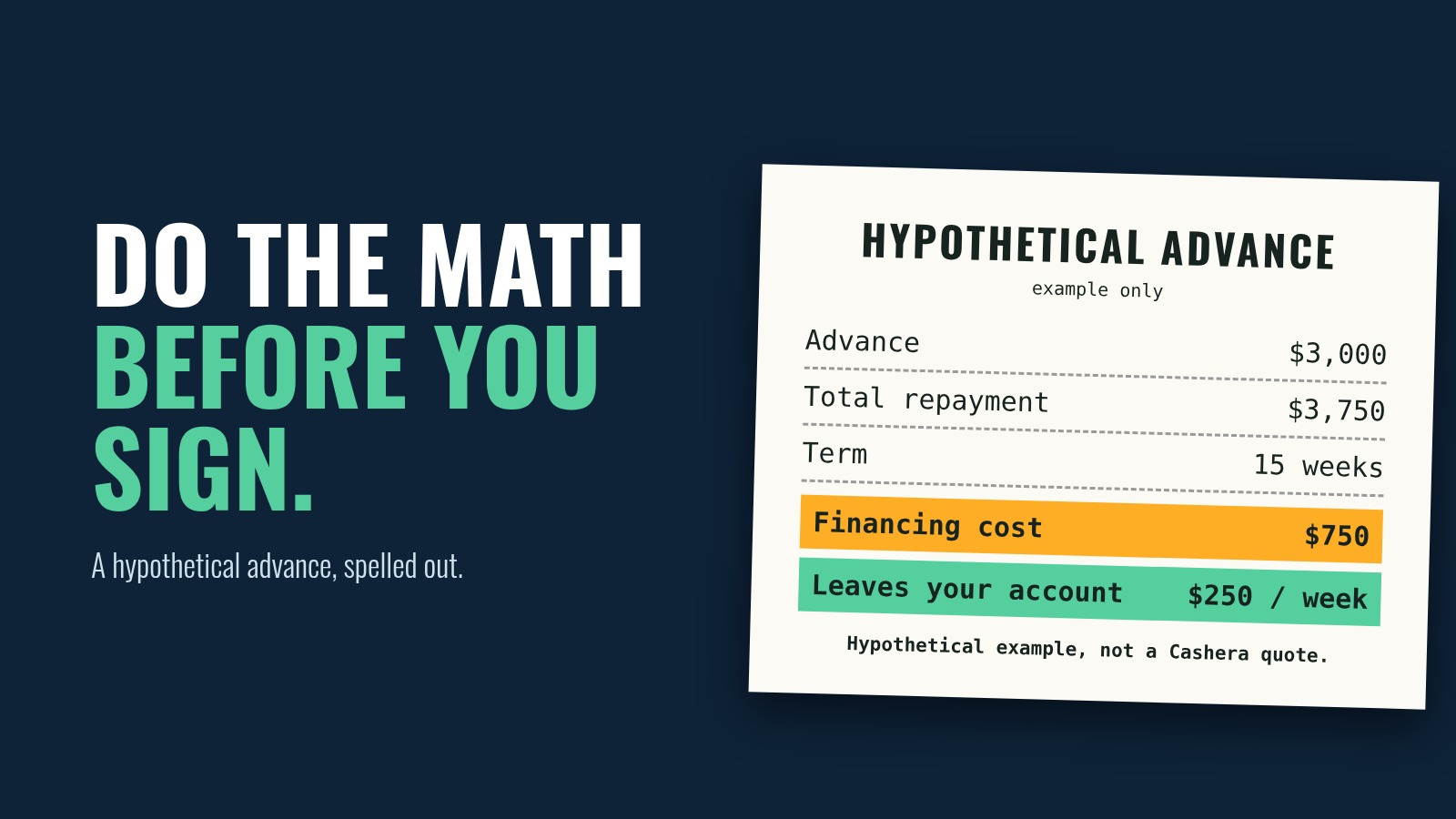 Hypothetical example, not a Cashera quote.
Before signing, ask:
- How much cash will I actually receive after fees?
- What's the full repayment amount?
- Are payments daily, weekly, or monthly?
- What happens if revenue dips?
- Will this fix the problem or just buy me two weeks of peace?
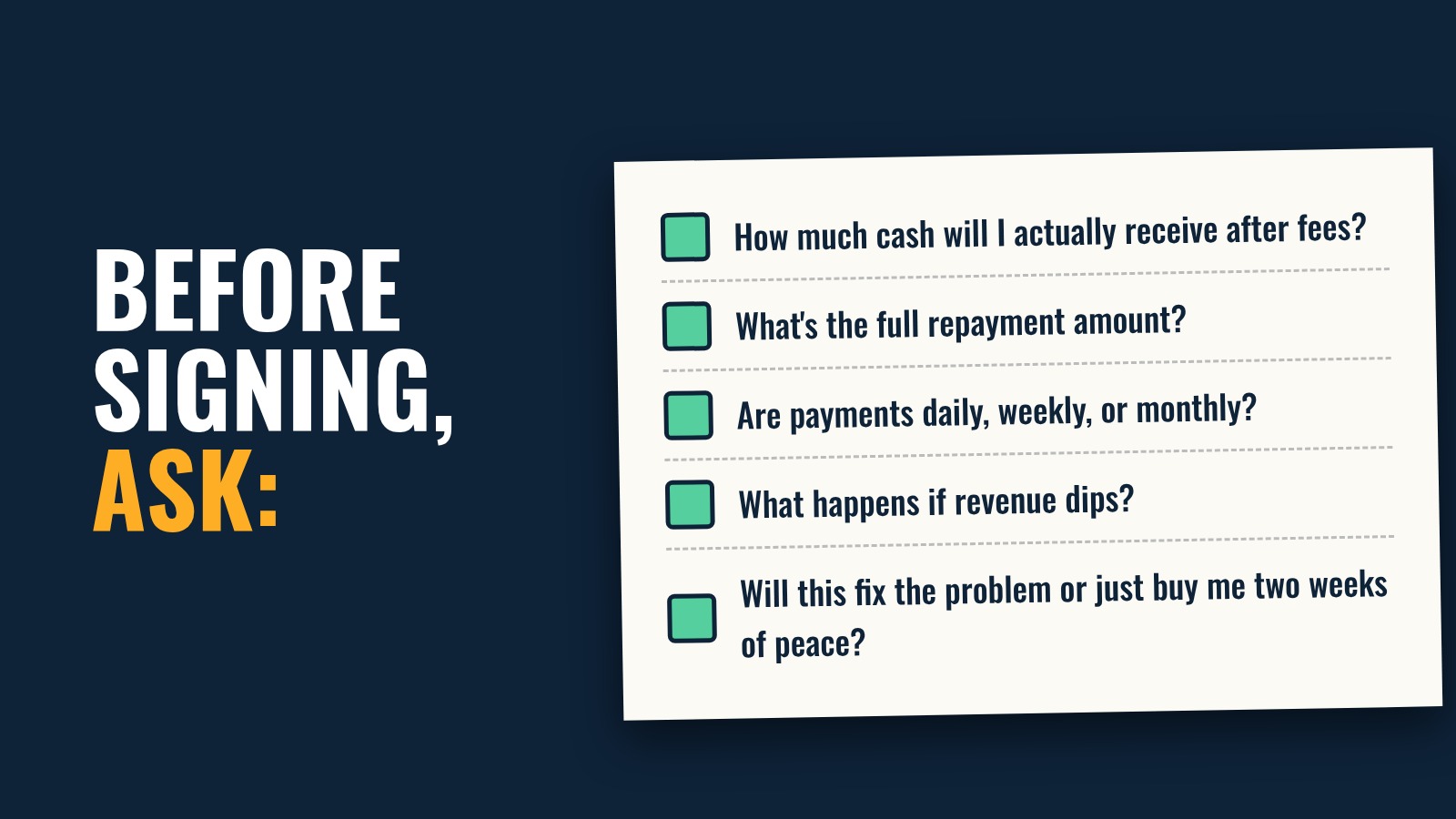
An approval is only useful if the numbers work.
Don't Just Find Funding. Fix Your Credit.
If your credit is blocking better financing options, work on that problem while you explore short-term solutions.
Separate business and personal finances. Check your credit reports for errors. Pay bills on time. Reduce outstanding balances where you can. And make sure the vendors you use actually report payments to business credit bureaus.
Not sure where to begin? Credit Banc put together a free Business Credit Builder 101 Course with four short videos, checklists, and practical steps for building a stronger business credit profile. No credit card required. And no need to pretend you enjoy reading credit bureau manuals.
Better credit won't fix every business problem, but it can help open more doors over time.
The Bottom Line
Bad credit doesn't mean you're a bad business owner. It means you need to be more careful about how you borrow, what it costs, and how you'll pay it back.
The goal isn't just to get funded today. It's to still be in business tomorrow.