Inventory, Equipment, and Materials: Why Summer Growth Gets Expensive First
Summer is officially here.
Not “coming soon.” Not “right around the corner.” Here.
Which means busy season is no longer a cute little theory on your calendar. It is standing in your doorway with purchase orders, vendor invoices, equipment repairs, and a clipboard full of things that cost money before they make money.
Lovely.
More customers are great. Bigger jobs are great. Higher demand is great.
But summer growth has a habit of showing up with a cover charge.
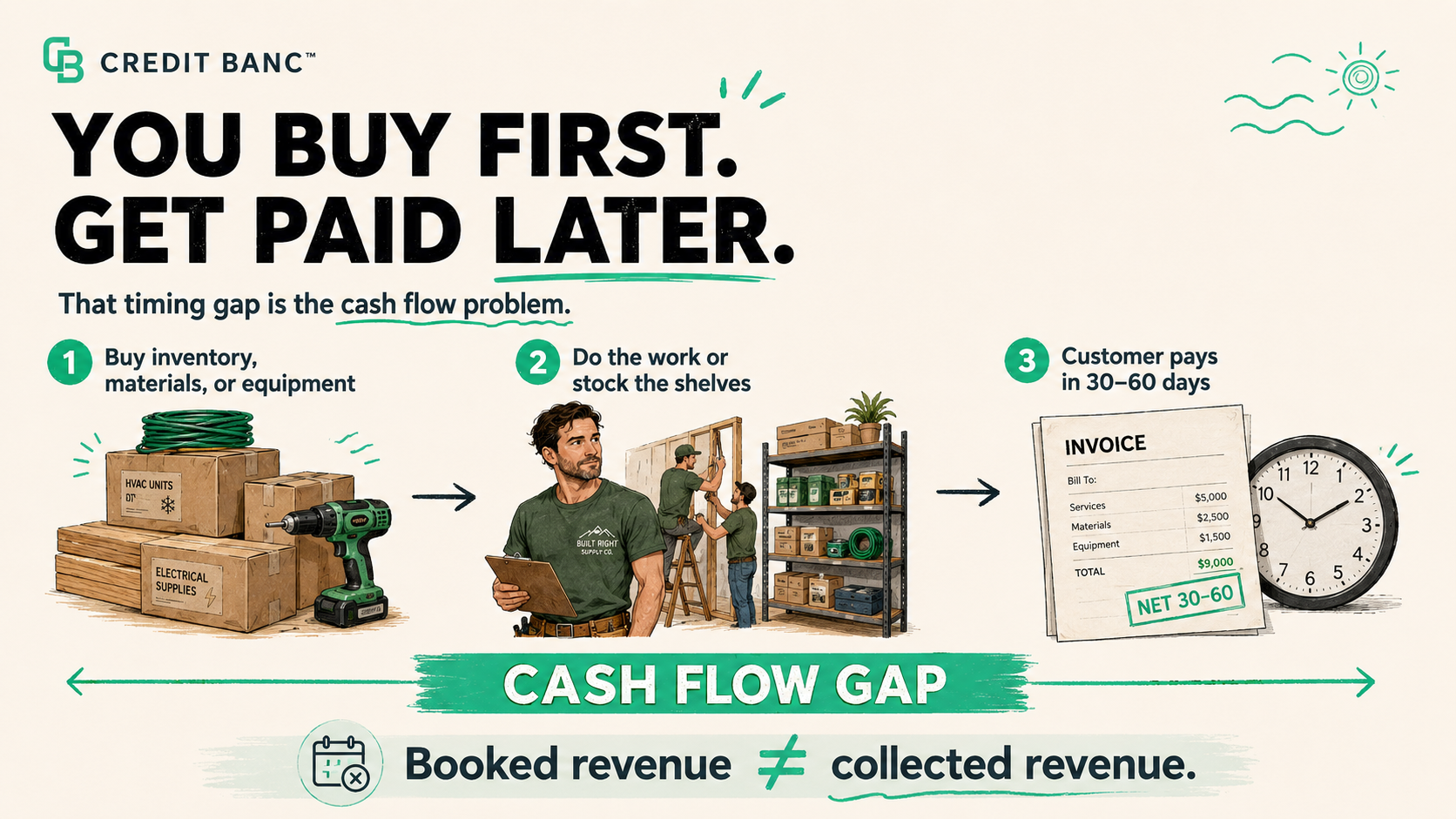
You may need to buy materials before the job starts. Stock inventory before sales hit. Repair equipment before the work gets done. Order supplies, rent tools, pay vendors, and keep operations moving before the revenue actually lands.
That is how a strong summer season can still create a cash flow gap.
Not because the business is failing.
Because the business has to buy first and get paid later.
In Why Summer Growth Can Create a Cash Crunch Before the Revenue Lands, we talked about the larger summer cash flow gap: growth often drains cash before revenue arrives. In The Summer Payroll Crunch, we looked at how staffing and labor costs can pile up before payments come in.
Now we are talking about the upfront costs that make summer growth expensive before it becomes profitable: inventory, equipment, and materials.
The Sale Has a Cover Charge
A lot of business owners think the hard part is getting the sale.
Sometimes it is.
But during summer, the harder part may be affording the sale.
A contractor wins a bigger project, then has to buy materials, cover fuel, line up subcontractors, rent equipment, and keep the rest of the business moving while waiting on the next draw or customer payment.
A retailer expects heavier summer traffic, but has to stock inventory now so there is actually something to sell when customers show up.
A landscaper, HVAC company, restaurant, event business, manufacturer, gym, or medical practice may need repairs, supplies, tools, parts, packaging, or upgraded capacity before the extra revenue appears in the account.
Booked revenue is nice. But collected revenue pays bills.
If you are not sure whether your summer expenses are outrunning your incoming cash, start with the Cash Flow Gap Calculator. It can help you see what is coming in, what is going out, and whether the timing is about to get tight.
Contractors Feel This Fast
For contractors, summer growth can be especially expensive.
More jobs often mean more materials, more subcontractors, more fuel, more tools, more equipment use, and more upfront vendor costs.
The dangerous part is that a job can look profitable on paper and still put pressure on small business cash flow right now.
If the customer deposit does not cover the true upfront spend, the business is carrying the gap.
If progress payments are too far apart, the business is carrying the gap.
If materials are due before the customer pays, the business is carrying the gap.
That is why business funding for contractors is often about timing, not just approval.
Before saying yes to a bigger summer job, ask:
What has to be purchased before the work starts?
Are deposits high enough to cover real upfront costs?
When does the next customer payment actually arrive?
What happens if that payment is late?
Will this job tie up cash needed for other work?
A big project can be a win.
It can also be a cash flow trap wearing a hard hat.
Inventory Can Tie Up Cash Fast
Inventory is weird.
You need it to sell.
But until it sells, it is cash sitting on a shelf pretending to be useful.
For retailers, wholesalers, eCommerce companies, restaurants, distributors, manufacturers, and seasonal businesses, summer demand may require bigger buys before sales actually happen.
That may include:
Seasonal products
Food and beverage inventory
Packaging
Parts and supplies
Raw materials
Retail stock
Event supplies
Job-specific goods
Inventory financing for small business may help when a business needs to stock up before sales hit, especially when demand is predictable and inventory turns quickly.
But this is where owners need to be honest with themselves.
Is this inventory likely to sell fast?
Are margins strong enough?
How long will cash be tied up?
What happens if sales are slower than expected?
Are you buying based on actual demand, or did a vendor discount whisper sweet nonsense in your ear?
That last question matters.
A deal is not a deal if it drains cash and sits in the back room until Labor Day.

Equipment Costs Do Not Wait Politely
Equipment has terrible timing.
It breaks during busy season. Needs replacing during busy season. Starts making a sound nobody likes during busy season.
Very professional of it.
Equipment financing for small business may help owners spread out the cost of equipment, repairs, replacements, or upgrades instead of draining cash all at once.
This can apply to trucks, kitchen equipment, landscaping equipment, medical or dental equipment, HVAC tools, manufacturing machines, construction equipment, POS systems, technology, or warehouse equipment.
The question is not just, “Can we buy it?”
The better question is, “Does this equipment help the business produce revenue, protect capacity, or avoid downtime?”
If the answer is yes, financing may be worth reviewing.
If the answer is, “It is shiny and the sales rep brought donuts,” take a breath.
Donuts are not a funding strategy.
Match the Funding to the Actual Problem
This is where a lot of business owners get tripped up.
They have one cash problem, then grab the first funding option that appears.
That can get expensive.
Inventory financing for small business may make sense when the need is stocking up before sales.
Equipment financing for small business may make sense when the need is tied to a machine, vehicle, tool, or operating asset.
A working capital loan may help when there are broader operating costs tied to summer growth.
A business line of credit may help when expenses are uneven and the business needs flexible access to funds.
A business cash flow loan or seasonal business financing option may help bridge timing between upfront expenses and expected revenue.
There is no one perfect product for every situation.
Annoying, but true.
The goal is to match the funding to the use of funds, repayment ability, and timing of the cash flow gap.
Do not use one generic loan for every problem just because it showed up first and smiled.
That is how you end up using a hammer on a plumbing issue and wondering why the floor is wet.
Do a Quick Upfront Cost Check
Before you buy inventory, approve repairs, order materials, or say yes to a bigger job, do a quick upfront cost check.
This does not need to be some dramatic mid-year business review with a conference room and emotional spreadsheet lighting.
Just answer the useful questions.
What do you need to buy now?
When will that expense hit?
When will revenue actually come in?
Are deposits strong enough?
Are receivables creating pressure?
Could one late customer payment create a cash problem?
Do you have backup funding options available before things get urgent?

This is also where a simple cash flow forecast for small business owners can help. Look at the next 30, 60, and 90 days. Map expected cash in, expected cash out, and the expenses tied to summer growth.
If customers are slow to pay, you may also be dealing with an accounts receivable cash flow gap. That means the revenue may be real, but the timing still sucks.
The Cash Flow Gap Calculator is a good first step if you want a clearer view of whether upcoming inventory, equipment, or materials costs are creating a gap.
The Fix: Buy Smart, Fund Smarter
The fix is not always funding.
Sometimes it is better deposits. Better payment terms. Earlier progress billing. Cleaner vendor terms. Tighter inventory planning. Delaying a non-essential purchase. Renegotiating when payments are due.
But sometimes, funding does make sense.
Especially if the business has real demand, a clear use of funds, and a repayment plan that matches when revenue is expected to come in.
The key is not to wait until the equipment is broken, materials are due, vendors are calling, and your bank account is making haunted-house noises.
At that point, speed starts looking more important than structure.
And that is where business owners get into trouble.
Credit Banc helps business owners compare small business funding options based on what the money is actually for, whether that is inventory, equipment, materials, payroll, seasonal expenses, or a broader cash flow gap.
Because getting funded is one thing.
Getting funded in a way your business can live with is the part that matters.
Don’t Let Summer Growth Eat Your Cash First
Summer growth is good.
More demand is good.
Bigger jobs, fuller shelves, repaired equipment, and stronger capacity can all help the business move forward.
But only if the business can afford the upfront cost of getting there.
Before you order the materials, stock the inventory, repair the machine, or say yes to the bigger job, check the timing.
Use the Cash Flow Gap Calculator to see whether your summer expenses and incoming revenue are lining up.
Already seeing pressure?
Book a call with Credit Banc to review funding options that may fit the actual use of funds, timing, and repayment ability of your business.
Summer growth should move your business forward.
It should not leave all your cash sitting in inventory, equipment, and materials while you wait to get paid.
